Commercial Work
Commercial Work
Please find below a list of commercial services that we offer:
Electrical testing and inspection
Full or partial rewires
Fuseboard replacements
Additional sockets, switches, lighting etc
Energy saving systems
Energy efficient systems
Fire alarms, emergency lighting
Security alarms
Floor boxes, telephone/data points CAT5 and CAT6
Suspended ceiling modular lighting
Free lighting design
PAT testing
Car chargers
Solar systems
Energy efficient systems
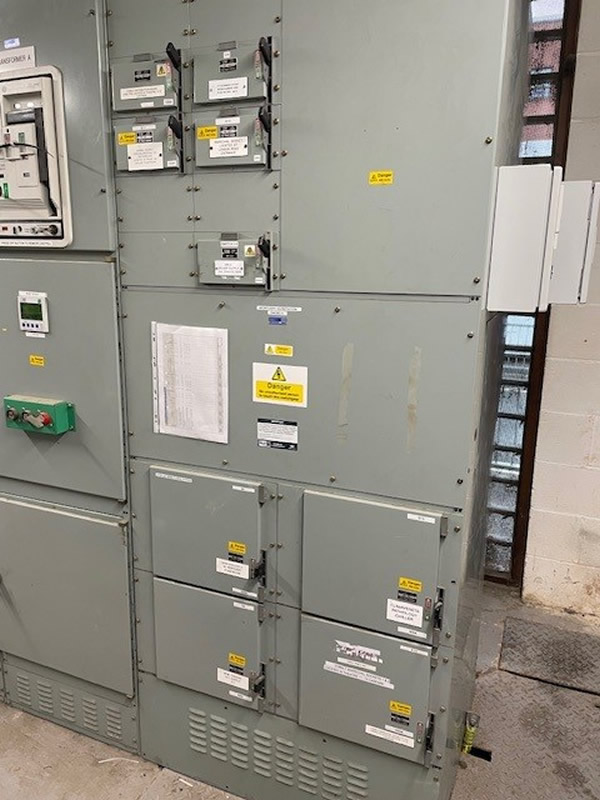
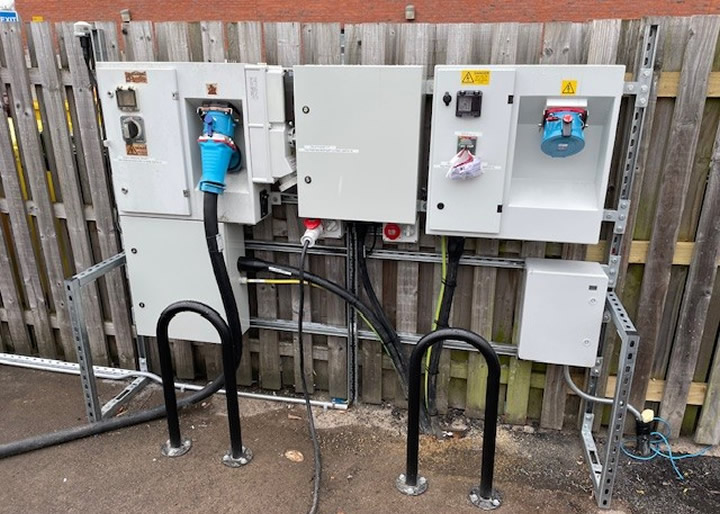
Upgrading Cabling Fitting New Lights
“Can’t rate theses guys highly enough have used them several times now – wouldn’t go anywhere else – very professional – friendly – helpful and efficient .”
Replacing Mains Powered Smoke Alarms
“Very impressed with how quickly an electrician came to visit and complete the job. They were in and out in 20 minutes and left absolutely no mess.”
Commercial Electric Project
For all your commercial electrical project requirements.
COMMERCIAL ELECTRIC SERVICES GALLERY
Some questions you may have………………..
What are the key legal requirements for electrical safety in commercial and industrial premises in the UK?
Businesses in the UK must comply with “The Electricity at Work Regulations 1989” and the “Health and Safety at Work Act 1974”, which require all electrical systems to be maintained safely and prevent danger.
What is an Electrical Installation Condition Report (EICR) and why is it important?
An EICR is a comprehensive assessment of the safety and condition of your electrical systems. It’s crucial for ensuring safety, compliance with regulations, and often a requirement for insurance.
How often should an EICR be carried out for commercial and industrial properties?
For most commercial properties (e.g., shops, offices, schools), an EICR is recommended every 5 years. For industrial facilities, it’s typically every 3 years. Additional inspections are needed after electrical alterations, incidents, or before new occupancy.
Is electrical testing a legal requirement in the UK?
While the law doesn’t explicitly mandate testing, it does require all electrical systems to be kept safe at all times. Periodic inspection and testing, like an EICR, is the most effective means to demonstrate this.
What are the BS 7671 (IET Wiring Regulations) and why are they important?
BS 7671 (currently the 18th Edition) is the national standard for electrical installations and wiring safety in the UK. Adherence to these regulations is crucial for ensuring safety, minimizing risks (shocks, fires), and demonstrating legal compliance.
What happens if a business doesn't comply with electrical safety regulations?
Non-compliance can lead to significant risks of fire, electrocution, or injury, resulting in legal liabilities, prosecution under health and safety laws, hefty fines, and potentially invalidating insurance policies.
What are the different "codes" (C1, C2, C3) found on an EICR report?
C1 (Immediate Danger): Requires urgent attention and immediate repair to eliminate risks.
C2 (Potentially Dangerous): Remedial work is recommended to prevent future issues.
C3 (Improvement Recommended): Suggests an upgrade for better safety but is not immediately urgent.
What is Portable Appliance Testing (PAT) and how often is it needed?
PAT involves regular testing of portable electrical appliances. The frequency depends on the type of equipment and its environment, ranging from 3-monthly for high-risk industrial equipment to 24-monthly or more for low-risk items.
Who is responsible for electrical safety in a rented commercial or industrial property?
While it can depend on the lease agreement, generally the responsibility lies with the business owner/tenant to ensure compliance with health and safety legislation.
Can I perform electrical testing and inspection myself?
No, it is strongly recommended to hire a qualified and competent electrician for electrical testing and inspection, as they have the expertise, tools, and accreditations (e.g., NICEIC) to ensure safety and compliance.
What types of services do commercial and industrial electricians provide?
They offer a wide range of services including electrical installation, repairs, maintenance, testing and inspection (EICRs, PAT), lighting design and installation (including LED upgrades and emergency lighting), fire alarm and security system installation, data cabling, control panel building, and sometimes EV charging point installation.
What are the benefits of regular electrical maintenance for a business?
Regular maintenance keeps electrical equipment reliable, prevents major problems, reduces energy costs, prevents disruptions to operations, identifies potential issues early, and ensures ongoing safety and compliance.
How does electrical maintenance differ for a factory operating 24/7?
Experienced industrial electricians can work within the constraints of a 24-hour manufacturing environment, often planning outages for testing around production schedules to minimize disruption.
What are common electrical issues found in older commercial/industrial installations?
Common issues include earthing deficiencies, faulty wiring, outdated consumer units/fuse boxes, damaged cables, and inadequate protection devices.
What is involved in a commercial/industrial electrical installation project?
This can range from installing new circuits and distribution boards to complete rewiring, upgrading lighting systems, and setting up machinery power supplies, all in compliance with BS 7671.
How can a business reduce its electricity bill through electrical services?
Electricians can help by installing energy-efficient LED lighting, implementing smart controls, optimizing power factor, and identifying and remedying inefficient electrical systems during maintenance.
Do commercial electricians offer emergency call-out services?
Many commercial and industrial electrical service providers offer 24/7 emergency call-out services to address unexpected power outages or electrical faults that could disrupt operations or pose a safety risk.
What accreditations should I look for in a commercial or industrial electrician?
Look for electricians who are NICEIC approved (or equivalent, like ELECSA or NAPIT). This signifies they meet rigorous industry standards for quality, safety, and compliance.
How are costs typically determined for commercial and industrial electrical services?
Costs usually depend on the size and complexity of the job, the number of circuits or appliances, accessibility of the electrical system, and the level of emergency. Quotes are often based on a per-circuit or per-appliance rate, or a day rate for larger projects.
What is the significance of "phase balancing" in industrial electrical systems?
In industrial premises, a three-phase supply is common. Phase balancing ensures that single-phase equipment supplied from a three-phase system is distributed evenly across the phases to prevent issues like incorrect operation of three-phase motors and to maintain efficiency.
If we haven’t answered your question please give us a call on 0800 7723124


Head Office
LKT Electrical Services
Unit 5E
Telford Road
Bicester
Oxfordshire
OX26 4LD
Unit 5E
Telford Road
Bicester
Oxfordshire
OX26 4LD