Fuseboard Replacement

Fuseboard Replacement

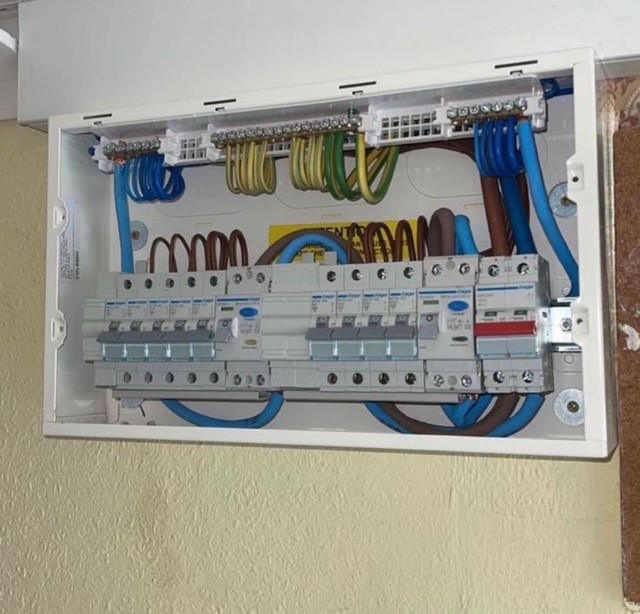
Many homes still have old-style fuse boxes installed with their outdated fuses, offering little or no protection against electrocution. Renewing your old fuse board has a number of benefits, including improved safety and electrical efficiency

By upgrading to an advanced fuse box, LKT Electrical Services can ensure that you have an essential residual-current device (RCD) that will provide additional protection. With the inclusion of mini circuit breakers, they offer crucial protection to each circuit throughout your home, in case of danger from an electrical fault or electricity surge.

We provide a complete fuse board replacement service. Our qualified electricians can professionally install a new fuse board or replace your old one, all to current British Standards. Before replacement takes place, our electricians inspect and carry out any required maintenance on your existing fuse board.

We can also fit or repair RCDs and circuit breakers, fit fuses and offer a complete re-wiring service for all types of fuse boards.

All fuse boards we replace are in line with 18th edition regulations. We offer the following options with regards to new fuse board replacements with RCD protection:

10 way 18th edition

16 way 18th edition

8 way 18th edition

Please note that if a fuse board is replaced, due to the requirements for electrical installations (BS7671) and for the issue of a Part-P certificate, the following additional work may need to be undertaken:

Upgrade of the main tails

Upgrade of the main earthing conductor

Upgrade of the main protective conductor (the gas, water, oil, steel, structure etc.)

Part-P certification
Fuseboard Replacement

“Kept well informed of all stages of testing. Made a convenient time for power to be turned off”

AYLESBURY

Sockets Installed with 2 LED downlights

“Very pleased with quality of work. Professional and polite. Would recommend.”

BICESTER

Kitchen Electrics – with sockets and switches

“Very good, on time, work completed quicker than expected and to a good quality.”

BRACKLEY

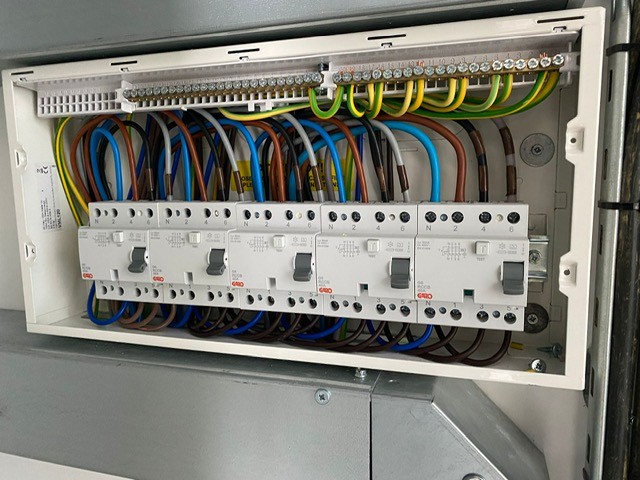
Fuseboard Replacement Project

For all your new or replacement fuseboard requirements.

DOMESTIC ELECTRIC SERVICES GALLERY

Some questions you may have………………..

What is an EICR and do I need one for my home?
An EICR (Electrical Installation Condition Report) is a formal document that assesses the safety and condition of your home’s electrical installation. While not legally required for private homeowners, it’s highly recommended every 10 years, and often insisted upon by buyers when selling a property. Landlords are legally required to have an EICR every 5 years or upon a change of tenancy.
How often should a house be rewired in the UK?
It’s recommended that a house be rewired every 25-30 years, especially if the wiring is old (pre-1970s) and doesn’t meet current building regulations. Regular EICRs can help determine if a full or partial rewire is necessary sooner.
What are the signs of faulty electrical wiring?
Common signs include flickering or dimming lights, burning smells from outlets or switches, buzzing sounds from outlets, frequently tripping circuit breakers or blown fuses, hot or discoloured outlets/switches, and minor electric shocks.
What's the difference between a fuse box and a consumer unit?
A fuse box uses fuses that need to be replaced after an overload. A modern consumer unit (also known as a fuse board or circuit breaker box) uses circuit breakers that can be easily reset. Consumer units offer superior protection against overloads and short circuits, often including RCDs for added safety.
What is an RCD and why is it important?
An RCD (Residual Current Device) is a life-saving safety device that automatically switches off the electricity if it detects a fault, such as current flowing down an unintended path (e.g., through a person). They protect against electric shock and reduce the risk of electrical fires. Modern consumer units typically have RCD protection on most circuits.
How do I find a qualified and reputable electrician in the UK?
Always use an electrician registered with a Government-approved scheme, such as NICEIC, ELECSA, or Part P. You can use the “Registered Competent Person Electrical” search facility online to find registered electricians in your area. Always ask for proof of their qualifications, insurance, and references.
What are the typical costs for common electrical jobs in the UK?

Costs vary based on the job, electrician’s rates, and location. For example, a socket replacement might be £25-£80, a light fixture installation £40-£120, and a consumer unit upgrade £450-£800. Full rewires can range from £1,500 to £10,000 or more, depending on the property size and complexity.

Do I need earthing and bonding in my electrical system?
Yes, earthing and bonding are crucial safety measures in almost all UK electrical installations, as required by BS 7671 (the Wiring Regulations). They protect against electric shock by providing a safe path for fault currents.
Are landlords legally responsible for electrical safety in rented properties?
Yes, landlords in England are legally required to ensure electrical installations are safe at the start of a new tenancy and throughout, with an EICR being carried out every 5 years. They must provide a copy of the report to their tenants.
Why does my circuit breaker keep tripping?
Frequent tripping of a circuit breaker usually indicates an overloaded circuit (too many appliances drawing power), a short circuit (where live and neutral wires touch), or an earth fault. An electrician can diagnose the specific cause and rectify it.

If we haven’t answered your question please give us a call on 0800 7723124
NICEIC Approved Contractor logo
ISO9001 logo
CHAS logo
Checkatrade logo
Which Trusrted Trader