Kitchens & Bathrooms
Kitchens & Bathrooms
Kitchens
Free LED lighting design
Low voltage or low energy downlights (spots)
Additional sockets, switches, lighting etc
Decorative light pendants and LED bulbs
Under cupboard lights LED
Under floor heating (free design service)
Cooker/cooker hood connections
Part-P certification
Bathrooms
Free LED lighting design
Low voltage or low energy downlights (spots)
Extractor fans (low noise) Inline fans
Shaver sockets/ mirror lights
Showers/ underfloor heating
Part-P certification
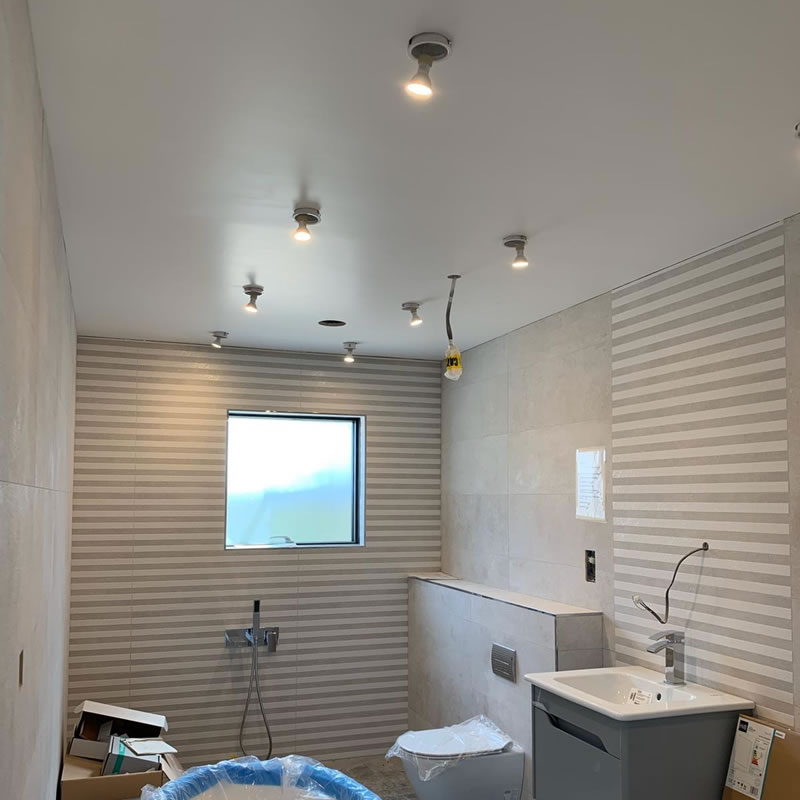
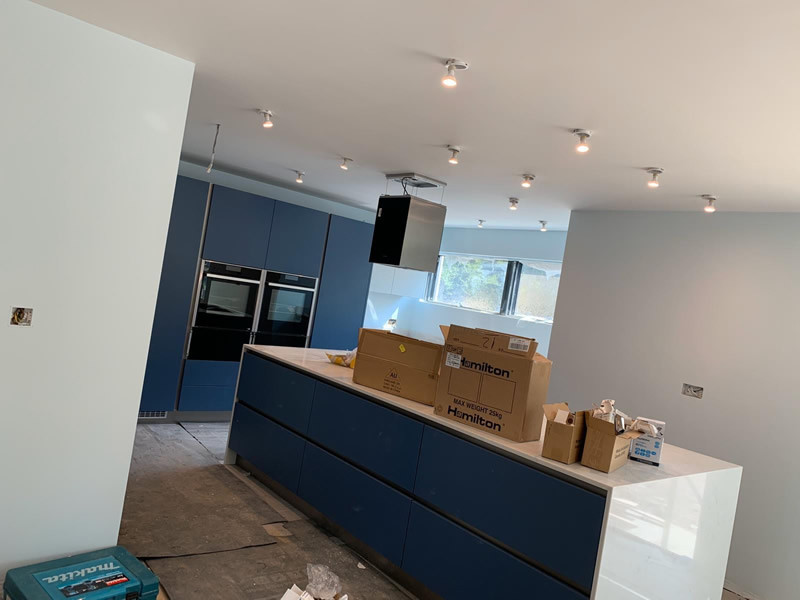
Kitchen Electrics – New Sockets Fitted & Swiitches
“Very good, on time, work completed quicker than expected and to a good quality.”
Oven & Hob Installation
“Excellent job and left the area spotless on completion and took way the old appliances and packaging.”
Kitchen & Bathroom Project
For your new kitchen or bathroom speak to us for your electrical requirements.
DOMESTIC ELECTRIC SERVICES GALLERY
Some questions you may have………………..
Can I do DIY electrical work in my UK home?
Some minor electrical work, like replacing an existing socket or light fitting with a like-for-like replacement, is generally permitted. However, “notifiable work” (such as installing new circuits, replacing a consumer unit, or any work in a bathroom or outdoors) must comply with Part P of the Building Regulations and should be carried out by a registered electrician or notified to local authority Building Control.
What's the difference between a fuse box and a consumer unit?
A fuse box uses fuses that need to be replaced after an overload. A modern consumer unit (also known as a fuse board or circuit breaker box) uses circuit breakers that can be easily reset. Consumer units offer superior protection against overloads and short circuits, often including RCDs for added safety.
How do I find a qualified and reputable electrician in the UK?
Always use an electrician registered with a Government-approved scheme, such as NICEIC, ELECSA, or Part P. You can use the “Registered Competent Person Electrical” search facility online to find registered electricians in your area. Always ask for proof of their qualifications, insurance, and references.
Do I need earthing and bonding in my electrical system?
Yes, earthing and bonding are crucial safety measures in almost all UK electrical installations, as required by BS 7671 (the Wiring Regulations). They protect against electric shock by providing a safe path for fault currents.
What are the electrical requirements for smoke alarms and carbon monoxide alarms in the UK?
For new or replacement installations, smoke alarms should ideally be mains-powered with a battery backup and interconnected. Carbon monoxide alarms should be mains-powered (hardwired, not plug-in) or powered by a tamper-proof lifetime battery, and installed within 1 to 3 meters horizontally from any fixed combustion appliance (excluding gas cookers). Regulations vary slightly between regions and for rented vs. owner-occupied properties.
My lights are flickering, what could be the cause?
Flickering lights can be caused by a simple loose bulb, but they can also indicate more serious issues like loose wiring connections, an overloaded circuit, or problems with the main electrical supply. It’s best to have an electrician investigate to rule out any safety hazards.
If we haven’t answered your question please give us a call on 0800 7723124



Head Office
LKT Electrical Services
Unit 5E
Telford Road
Bicester
Oxfordshire
OX26 4LD
Unit 5E
Telford Road
Bicester
Oxfordshire
OX26 4LD